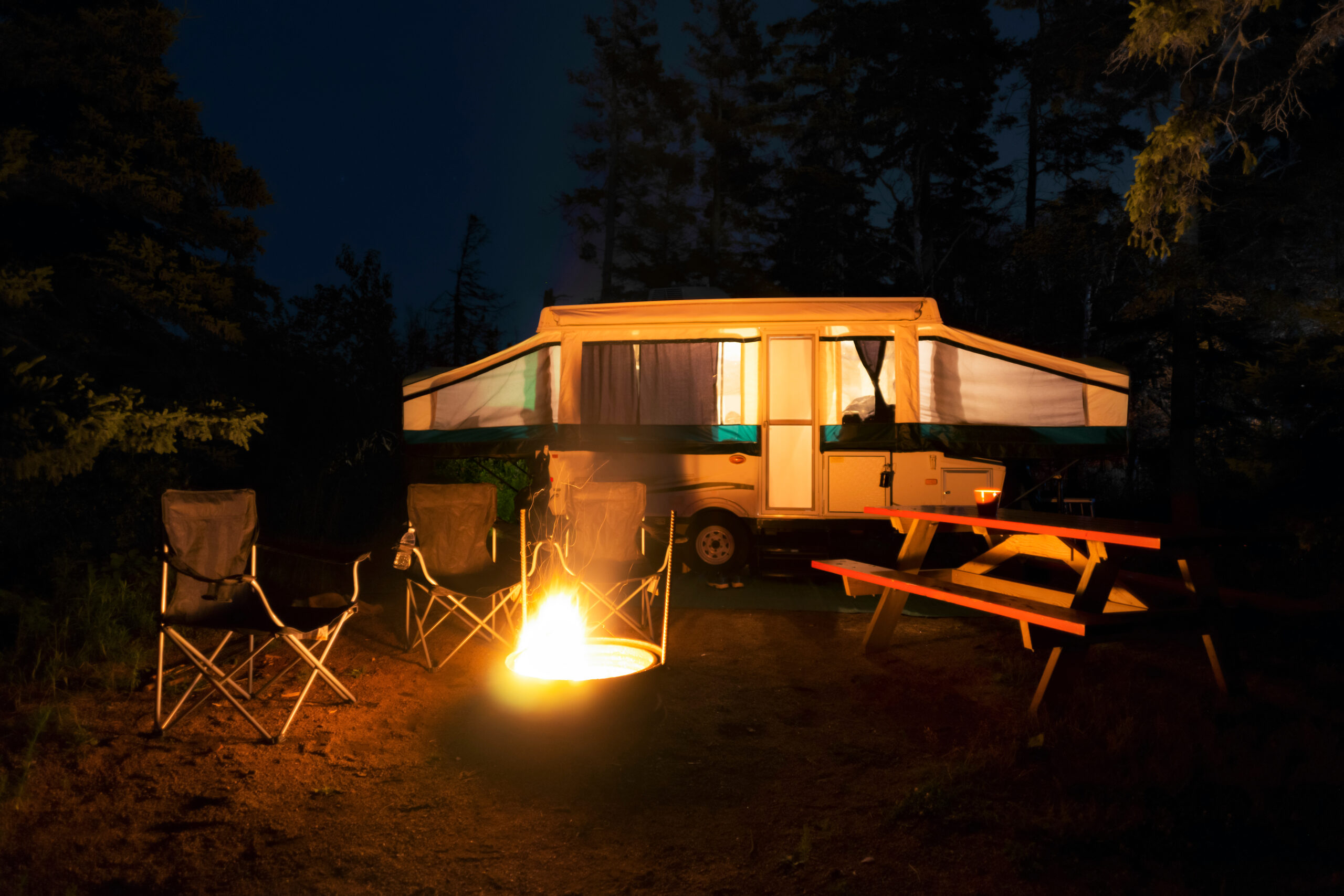
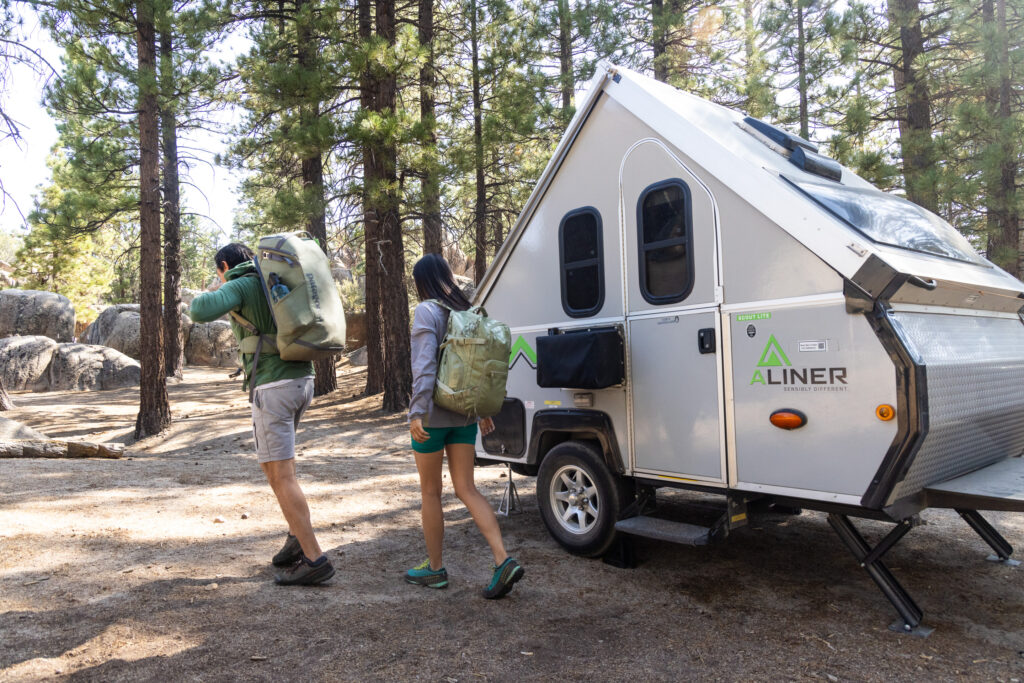
Also known as tent trailers, pop-up campers can be an affordable option if you’re just starting out or if you’re looking for a slightly more “rustic” method of RVing. Yet even within the pop-up world, there are differences. There is a dividing line between soft-sided pop-up campers, the classic tent-style trailer, and the hard-sided pop-up campers, such as A-frames and fold-down trailers.
Materials & Durability
The traditional pop-up camper typically has canvas walls, giving a more “open air experience” as the soft walls make the camper feel more tent-like. Many folks appreciate this, making this type of RV a good steppingstone from tent camping into RVing. However, canvas requires maintenance for tears and mildew, leading to eventual replacement, which can be costly. Maintenance is especially important after rainy weather, as the material needs to dry out completely. If you pack up in the rain, then you need to reopen the camper when the weather is better at home so that it can complete this process. The center portion of the roof, where lights and vents are located, is of solid material, whereas the pull-out portions where beds are usually situated have a canvas roof. As can be expected, the traditional pop-up offers less insulation. However, many units are equipped with operational air conditioning and furnace capabilities for added comfort.
Hard-sided pop-ups, by comparison, have an easier time with temperature regulation and maintaining a comfortable interior environment. They have durable, hard-material exteriors, which are not subject to the same problems as soft-sided pop-ups as well as offer added protection from the elements. Temperature control is also easier, such as when using A/C.
Amenities
As with any RV type, amenities vary from economical to luxurious depending on the size and brand. Most pop-up units have a dinette (which sometimes doubles as a sleeping space), kitchenette, and perhaps a small refrigerator. A lot of pop-ups don’t have a bathroom or shower, although larger ones may come equipped with a compact wet bath (combo toilet/shower) or offer it as an add-on. Remember, though, fresh water tanks and holding tanks are smaller compared to other RV types, so you will need to empty them frequently if they are used, especially if you have a lot of people staying in the camper over several days.
Space
Pop-ups can fit four to eight people comfortably depending on the size of the unit. Smaller hard-sided pop-ups are constructed for only two people. There tends to be more head room in the traditional soft-sided pop-up.
Price
Pop-up campers have a range, according to Go RVing, of $10-25K, with used units available for a lower price tag. There is a difference, however, depending on whether you go with soft-sided or hard-sided. It’s more affordable to upgrade to larger units to fit more people if you go traditional. Although hard-sided pop-ups may be able to accommodate up to eight people, it’ll cost more to do so. Still, pop-ups are an economical option compared to larger trailers and motorized RVs.
Storage
The compact, low-profile design of both hard-sided and soft-sided pop-ups make them easier to store than other RV types. They may be able to fit in a larger garage, depending on the length (the range is typically 15-23 feet). It’s important to cover your camper during storage to extend the life of the roof material.
Setup
Soft-sided pop-ups take 15-20 minutes to set up as slides need to be pulled out, the roof needs support, the door needs to be put into place, etc. The same applies for breaking it down at the end of a camping trip. Hard-sided pop-ups take less time, making them a good option if you value ease or aren’t physically able to complete all the tasks to set up a soft-sided pop-up camper (some things are higher up or require a little bit of strength).
Security
The material of the hard-sided pop-ups make them more secure against break-ins, more stability against poor weather, and more privacy from the noises and eyes of the outside world. Keep in mind, too, that there can be restrictions to using soft-sided pop-up campers in parts of the country if you’re planning to travel. Yellowstone, for instance, which has a steady population of bears, has rules against exposed canvas campers due to safety. Hard-sided campers don’t have these restrictions.
Towability
Pop-ups are lighter weight due to their choice materials and streamlined profile, allowing them to be towed by a wider variety of vehicles (including the typical family vehicle). Both types are compact, low-profile, and more aerodynamic compared to taller RV types. Pop-up campers can weigh between 600 and 2500 pounds unloaded. But then you pack all the gear and it’ll be more. There are lightweight units as well as heavier ones and different sizes (lengths). Weight is something to keep in mind regardless of whether you choose a hard-sided pop-up or a soft-sided pop-up, so watch that you do not exceed your intended tow vehicle’s towing capacity. A competent salesperson should be able to point you in the right direction of a unit that will work for you based on your intended tow vehicle.