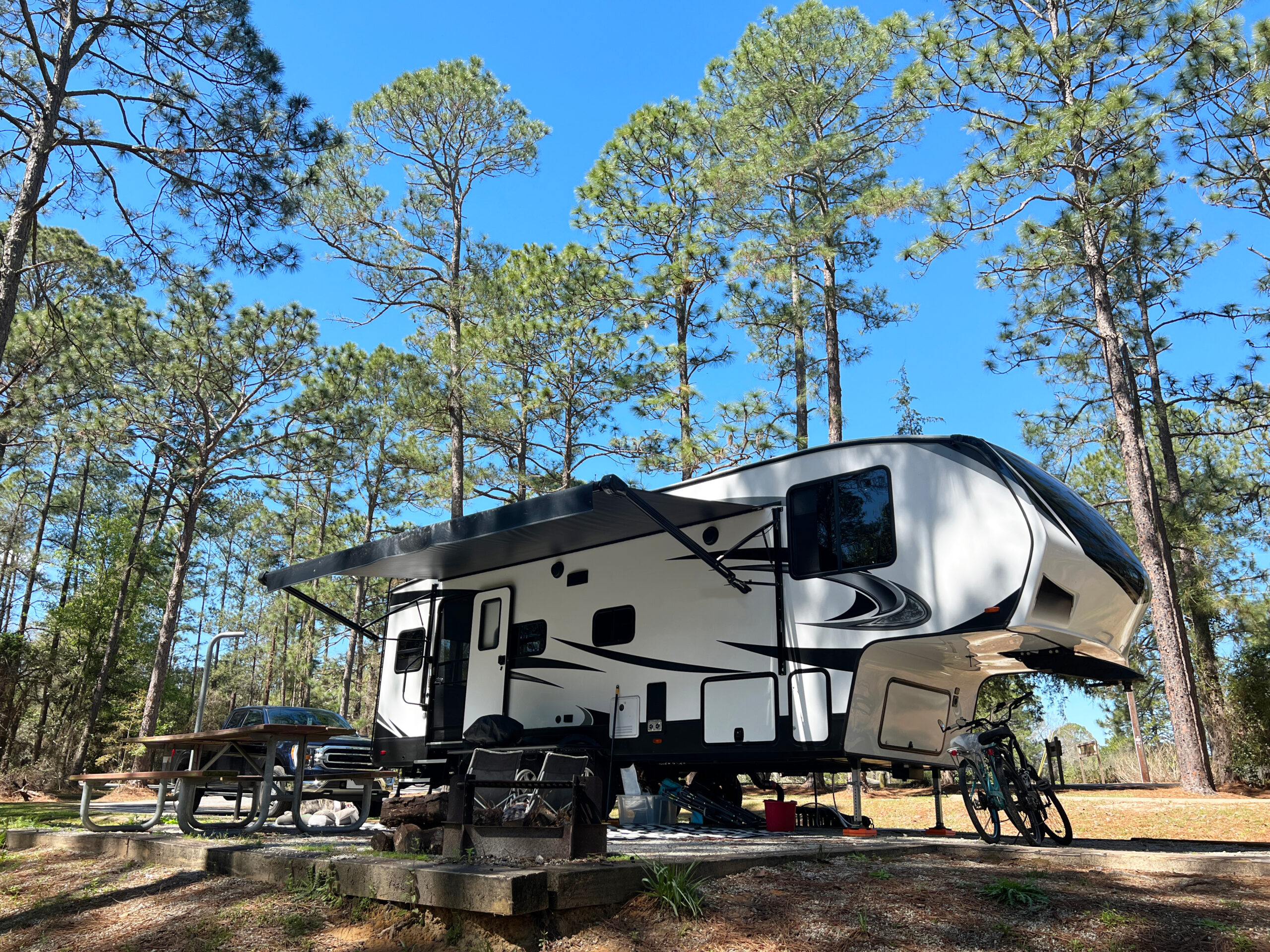
A fifth wheel trailer is the second-most-popular RV type on the market. Ranging from 21 to 40 feet, a fifth wheel has a lot going for it that makes it an appealing choice: larger windows, a raised forward section for added space, sleeping space for up to eight people, taller ceilings, modern amenities. Some fifth wheel trailers have a rear drop door, which can serve as a deck as well as a ramp for offloading equipment such as bikes and ATVs.
To get from campground to campground, a fifth wheel trailer is typically towed by a pickup truck with a specialized hitch known as a fifth wheel hitch. This hitch handles a lot of load, so it’s important to keep it in good condition.
Preventative maintenance is important for safe towing and to prevent wearing hitch components, as not doing so can end up turning into an expensive fix or replacement.
Stop Fifth Wheel Hitch Problems Before They Start
The user’s manual of your fifth wheel hitch should come with recommended maintenance.
Tasks to Complete Before a Trip
It’s important to thoroughly visually inspect the hitch prior to connecting it with your pickup truck.
- Examine the hitch jaws and look for signs of wear, deformities, or cracks. Any of these issues could affect the jaws’ grip on the kingpin.
- Look at all the mounting bolts and hardware, checking for tightness. Looseness can be an indication of fatigue.
- Check the kingpin and look for wear patterns, grooves, or uneven surfaces.
- Check the hitch or lube plate for warping or cracks.
- Keep an eye out for corrosion, especially where moisture tends to collect. It’s important to keep your fifth-wheel hitch covered in order to avoid rust, especially during storage. Add a rust inhibitor if needed.
- Tip: Using a flashlight can help to better spot cracks or wear.
Once you’re satisfied with the visual inspection of the fifth wheel hitch components, take time to clean things up and add lubrication.
First, wipe away any old grease, dirt, etc., from the various components of the hitch. A wire brush can also be helpful. Don’t simply depend on adding lubrication over old or dirty grease, as old particulates can end up adding friction and causing wear to the hitch components.
Then, precisely apply a thin layer of grease (refer to the recommendation of your hitch manufacturer) to the top of the hitch plate, the contact surfaces of the hitch jaws, and into the zerks (if your hitch has them).
Stay Alert During Your Travels
Some problems from fifth wheel hitch components are more evident when you’re driving and towing the fifth wheel. If you hear any new, unfamiliar noises such as clunking or squeaking, experience rougher than normal movement, or find your components binding, there may be a problem that needs addressing. In general, pay attention if anything feels or sounds different. Always take the time to check if something does.
Bring in the Pros
Some parts can be replaced on your own, but if you notice significant wear, warping, cracking, or damage to anything on your fifth-wheel hitch, it may be best to consult a professional. Don’t let anything go for too long, both for your safety and for the longevity of your RV.
Maintaining your fifth wheel hitch takes diligence, but it helps to reduce wear, keep the hitch jaws locking tightly, and keep you and your rig safe during travel. Take the time to take the proper preventative steps so that you can enjoy all the RV lifestyle has to offer.