
In past articles, we’ve discussed how to travel and camp with young children (babies, toddlers, and early grade school) as well as how to enjoy going camping with your teens. But what about the kids in between, particularly in the ages 9-12 age range?
This is an age where the kids start to “grow up.” They still love to play, but they want to do more serious or adventurous things that are more along the lines of things they enjoy doing. They desire independence, yet don’t necessarily take the most mature approach. They can’t always foresee the dangers around then, yet are becoming acutely aware that they exist. Your once-sweet little boy or girl may now be inpatient and snarly, feeling like “they never to get to do anything.”
And yet, this is the absolute best time to introduce camping, if you haven’t camped much before, or to make more of an effort to go camping more. It’s a golden opportunity to connect and grow with your maturing child so that you have a firm foundation later on.
Why is camping a good option?
There are lots of reasons why camping is such a solid choice.
- Camping gets growing bodies outside to be active, to move, to participate in activities they may not have an opportunity to try at home.
- Camping invites curious minds to explore, think, or simply to rest in the beauty of nature.
- Camping invites adventure, introducing children to new and exciting things that may turn out to be a lifelong passion.
- Camping gets young eyes away from screens and all their influences, and to truly experience the world rather than viewing it digitally.
- Camping isn’t overly expensive for a family, which helps the overall budget but also indirectly teaches kids that money doesn’t buy happiness or a good time or a beautiful place to visit.
How can I help my preteen during travel time?
Attention spans are still short at this age. We need to teach patience to our kids while also recognizing that they may not be able to push themselves as adults tend to do when we are impatient to get someplace. So really, it’s a lesson for adults, too, to slow down a bit and go at a kid’s pace. You’ll have a happier pre-teen if you have the following things ready for them during the time spent traveling in the vehicle or RV…
- Reserve special items just to use during travel days, such as drawing sets, coloring kits, a new book, or magnetic games. These can be surprises or you can invite your child to choose a couple new items plus a couple items from home.
- Pack plenty of snacks, because nothing makes a pre-teen grumpier than a slightly hungry stomach.
- Purchase audio books or borrow them from the local library that is age appropriate and aligned with your child’s personal interests.
- Consider whether you want to allow any screen time during a travel day and set limits as to its use.
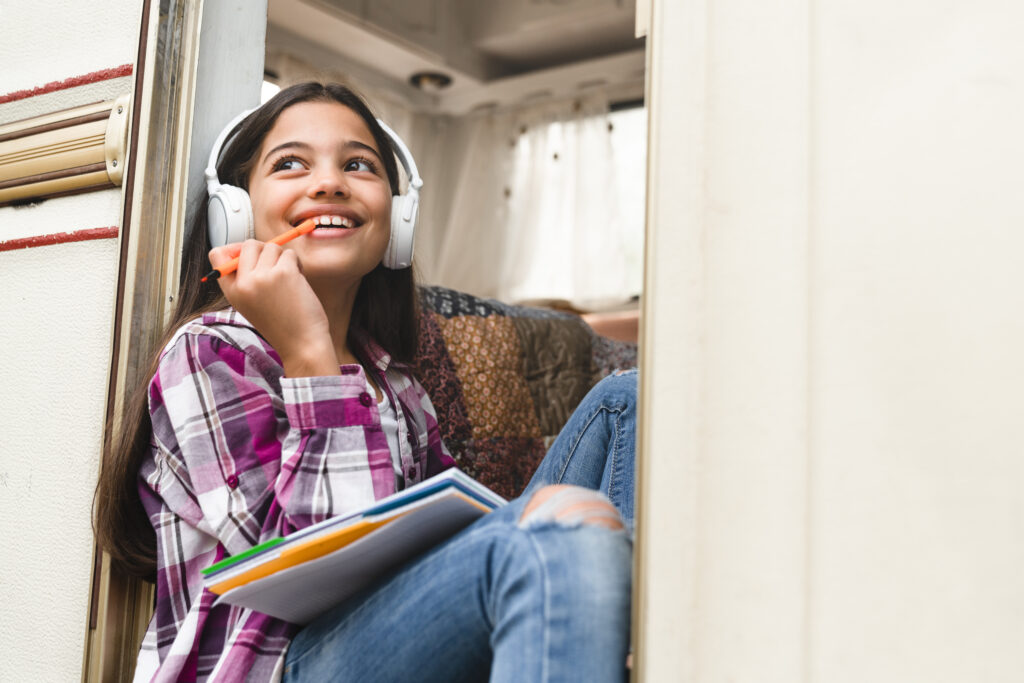
- Bring along the classic iPod or Mp3 player and headphones with music your child enjoys, which can also help them zone out from the rest of the family at times.
How much travel is too much travel?
You know your preteen and your family dynamics the best. Yes, there may be long travel days, but there should be short ones as well. Generally speaking, three to six hours of traveling a day may be about right. Incorporate preplanned stops along your route to explore or do something fun for an hour or two to help break up the monotony of driving. This can be as simple as a playground, visiting a nature center or museum, swimming at the beach, or going on a short hike.
Ask your preteen what sorts of things they would like to do, show them the route, invite them to research cities or parks. Giving your child the opportunity to have a say in the plans can make a difference in their overall experience of the trip.
What sorts of jobs can I give my preteen at the campsite?
There are lots of ways preteens can help! Some chores require supervision, while others do not. Some good jobs include loading and unloading items, managing a checklist, setting up bed areas, sweeping out the camper, helping with food prep and clean-up, and making kindling.
How can I keep my preteen safe if we are trying to limit electronics during camping?
This is at your discretion. One suggestion is to bring along smart watches or an extra mobile phone that are used only if your child is allowed to go the playground or the camp store or somewhere else on campground property alone or with another child. Another idea is a tracking device that could attach like a keychain somewhere on your child.
However, the most significant thing to teach your preteen is self-awareness: pay attention to their surroundings, don’t go anywhere with strangers, listen to gut feelings if something feels “off.” This can also be a time to start building trust by allowing your preteen more freedom and flexibility to stretch their wings a bit while at the campground. Discuss safety and your policy that they will go and do things that align with your expectations. It’s exciting for kids and probably scary for parents, but it’s an important step in their development on their way to becoming adults.